Showing posts with label Astatic D-104 Silver Eagle. Show all posts
Showing posts with label Astatic D-104 Silver Eagle. Show all posts

Astatic D104 and 10DA mic sound comparison
Astatic D104 and 10DA mic sound comparison
quick listen of the D104 mic and 10DA Super Sidebander hooked up to a mic tester. D104's are tailored for high frequency cutting audio and 10DA is flat and limits all hi frequency after 3khz's.
quick listen of the D104 mic and 10DA Super Sidebander hooked up to a mic tester. D104's are tailored for high frequency cutting audio and 10DA is flat and limits all hi frequency after 3khz's.
Astatic Silver Eagle Trouble shooting and repair PART 2
Astatic Silver Eagle Trouble shooting and repair PART 2
Astatic D-104 Silver Eagle Mic Mods
Astatic D104 Silver Eagle Mic
lollipop
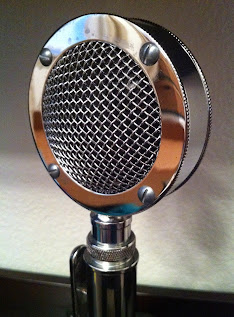 The D-104 range of mics were first and foremost communications grade microphones. Remember that fact and say it twice.
 The were not design to be recording units,but for amateur\non-critical\radio use. In that role, and coupled correctly, the D-104 is a great communications microphone. Clean, CRISP, highly intelligible audio that makes each syllable perfectly understandable.
Larry King audio... nope.....ESSB audio...nope, but if you want that, spend a ton of money or use AM or FM. SSB was designed ( and works well ) to be an efficient, narrow bandwidth mode. The audio part of it was deemed acceptable ...and still is.
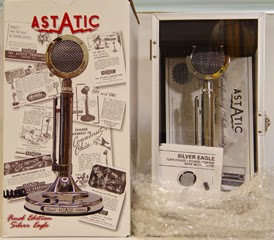
They always had crisp, CLEAN, and understandable audio.
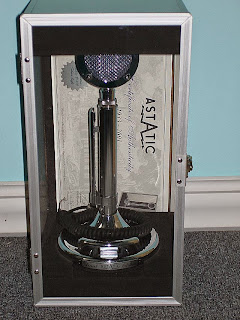
Used D-104's usually need to be re lubricated, and it does not hurt to re-solder all contacts. Adding a electret element to replace a working UNDAMAGED original element is pure folly, and there are those that have done it. Kind of like putting a Ferrari engine in a Corolla and then hoping somehow that it will be a Ferrari.
There is NOTHING wrong with the audio of a D-104 if one remembers what it was designed to do ,AND if it is not over driven AND is electrically and mechanically working.
Most new hams, however, have no idea of the tonal design plan that was incorporated into this mic and think it should sound like a studio mike. Then again, even experienced hams still believe that somehow, someway, SSB can become and deliver AM or FM quality audio easily. Sorry folks but there is one word preventing that.......BANDWIDTH!!

lollipop

 The were not design to be recording units,but for amateur\non-critical\radio use. In that role, and coupled correctly, the D-104 is a great communications microphone. Clean, CRISP, highly intelligible audio that makes each syllable perfectly understandable.
Larry King audio... nope.....ESSB audio...nope, but if you want that, spend a ton of money or use AM or FM. SSB was designed ( and works well ) to be an efficient, narrow bandwidth mode. The audio part of it was deemed acceptable ...and still is.

They always had crisp, CLEAN, and understandable audio.

Used D-104's usually need to be re lubricated, and it does not hurt to re-solder all contacts. Adding a electret element to replace a working UNDAMAGED original element is pure folly, and there are those that have done it. Kind of like putting a Ferrari engine in a Corolla and then hoping somehow that it will be a Ferrari.
There is NOTHING wrong with the audio of a D-104 if one remembers what it was designed to do ,AND if it is not over driven AND is electrically and mechanically working.
Most new hams, however, have no idea of the tonal design plan that was incorporated into this mic and think it should sound like a studio mike. Then again, even experienced hams still believe that somehow, someway, SSB can become and deliver AM or FM quality audio easily. Sorry folks but there is one word preventing that.......BANDWIDTH!!

Astatic D-104 Silver Eagle Fet Mod Part 1
D104 Fet modification for better audio on solid state equipment.
Credit: This modification can be found online at Mr. Walter A. Breining is the creator of this information. I do not take credit for his information. But the link above can be downloaded by anyone who wishes to perform the modification. 73's and have fun with this one.
Credit: This modification can be found online at Mr. Walter A. Breining is the creator of this information. I do not take credit for his information. But the link above can be downloaded by anyone who wishes to perform the modification. 73's and have fun with this one.
D104 Microphone Source Follower
This video shows how I modified the Astatic D104 microphone and added a JFET source follower circuit to it with a 9V battery. Its a pretty easy mod. I also use a phase switch. I highly recommend using this circuit for the D104. I prefer the source follower rather than a common source type circuit as the D104 mic already has a high audio output and presents a high Z .to the TX speech amp. I have used this circuit in this mic and it has been running for about 5 years with no issues on various transmitters.
How to clean the relay contacts in Astatic D104 with lazy bar stands
How to clean the relay contacts in Astatic D104 with lazy bar stands
Method shown and explained will work with most of the Astatic bases with the lazy bar such as TUP9, Night Eagle, Silver Eagle
Astatic D-104 Silver Eagle Mic Mods
Astatic D-104 Silver Eagle Mic Mods
Modifications for even more basses and warmer sound

The D-104 has been around since the 30’s and is still popular today for communications. The current ones are still pretty much the same except that in the early 70’s a two- transistor pre amp was added to the base. The D-104 is considered by many to be the coolest looking mike around.
The early elements used a Rochelle salts crystal but later a ceramic crystal was used to make the element more rugged. These elements are unique in that the diaphragm is convex instead of concave. Although these diaphragms were made of aluminum foil, Astatic used an ingenious method of placing batting in contact with the element. This eliminated the “tin” sound of these elements and they are capable of a surprisingly good sound. The peaky sound that we sometimes hear from these mikes is due to improper loading, not the diaphragm material.
Without the pre amp, these microphones sound very good with tube equipment that provided a very high impedance load to the element.
Demonstration of the the Vintage Astatic D-104 Microphone
Demonstration of the the Vintage Astatic D-104 Microphone
3 different mikes, although you may think not!
Edward's D104 converted
Edward's D104 converted
We convert Edward's D104 to an amplified mic so it could work with his Icom radio. Enjoy Stickman
Andre's D104 modded and repairs
Here we serviced 2- D104 lolly pop mics and we also changed up the tunes of them. Enjoy Stickman
Andre's D104 modded and repairs
D104 Silver Eagle
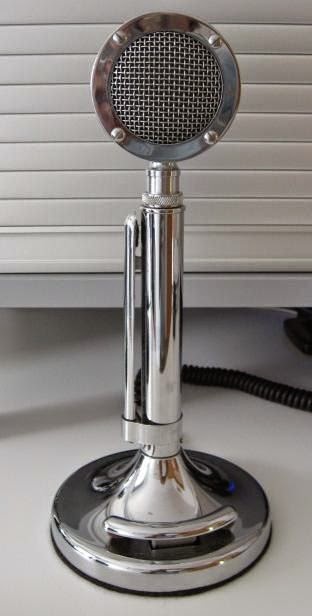


Astatic D-104 Silver Eagle Mic Mods Connection to Yaesu
Astatic D-104 Silver Eagle Mic Mods Connection to Yaesu

Astatic D-104 Silver Eagle Mic Mods Connection to Yaesu
The Astatic D-104 desktop microphone has a very sharp sound due to it’s crystal microphone capsule and it has also has a great preamp to get enough voice level in the transceiver that gives you a great advantage for DX. Also the sharp modulation is heard better through noise on your QSOs.
But the mic doesn’t sound well on all transceivers cause of their internal high-, low- or band-pass AF filters. On most modern transceivers the modulation sound too much sharp or tiny cause of the lost of basses.

Astatic D-104 Silver Eagle Mic Mods Connection to Yaesu
The Astatic D-104 desktop microphone has a very sharp sound due to it’s crystal microphone capsule and it has also has a great preamp to get enough voice level in the transceiver that gives you a great advantage for DX. Also the sharp modulation is heard better through noise on your QSOs.
But the mic doesn’t sound well on all transceivers cause of their internal high-, low- or band-pass AF filters. On most modern transceivers the modulation sound too much sharp or tiny cause of the lost of basses.
Astatic D-104 Silver Eagle Mic Modifications
The D-104 has been around since the 30’s and is still popular today for communications. The current ones are still pretty much the same except that in the early 70’s a two- transistor pre amp was added to the base. The D-104 is considered by many to be the coolest looking mike around.
The early elements used a Rochelle salts crystal but later a ceramic crystal was used to make the element more rugged. These elements are unique in that the diaphragm is convex instead of concave. Although these diaphragms were made of aluminum foil, Astatic used an ingenious method of placing batting in contact with the element. This eliminated the “tin” sound of these elements and they are capable of a surprisingly good sound. The peaky sound that we sometimes hear from these mikes is due to improper loading, not the diaphragm material.
Without the pre amp, these microphones sound very good with tube equipment that provided a very high impedance load to the element.

The early elements used a Rochelle salts crystal but later a ceramic crystal was used to make the element more rugged. These elements are unique in that the diaphragm is convex instead of concave. Although these diaphragms were made of aluminum foil, Astatic used an ingenious method of placing batting in contact with the element. This eliminated the “tin” sound of these elements and they are capable of a surprisingly good sound. The peaky sound that we sometimes hear from these mikes is due to improper loading, not the diaphragm material.
Without the pre amp, these microphones sound very good with tube equipment that provided a very high impedance load to the element.

With solid state equipment these elements do not sound as good by themselves. Even with a high impedance load such as 50k ohms, they are often high pitched and peaky sounding. With some applications this high pitched sound is preferred. But sometimes this results in a thin or nasal, very middy, unnatural sound. These elements exhibit very low impedance at very high frequencies and very, very high impedance at low frequencies. Even at 50K ohms, output voltage is swamped at low frequencies making the sound high-pitched.
If we bridge the element with a very, very high impedance load, several Meg ohms, it will sound much smoother, be more natural and have low end while still retaining presence.
If we bridge the element with a very, very high impedance load, several Meg ohms, it will sound much smoother, be more natural and have low end while still retaining presence.
Subscribe to:
Posts (Atom)